Camera intake
Connect existing cameras, streams, or edge nodes with minimal site changes.
For hazchem, storage, charging, and small-premises sites, VisionFire connects recognition, alerting, response records, and evidence reports into a traceable loop.
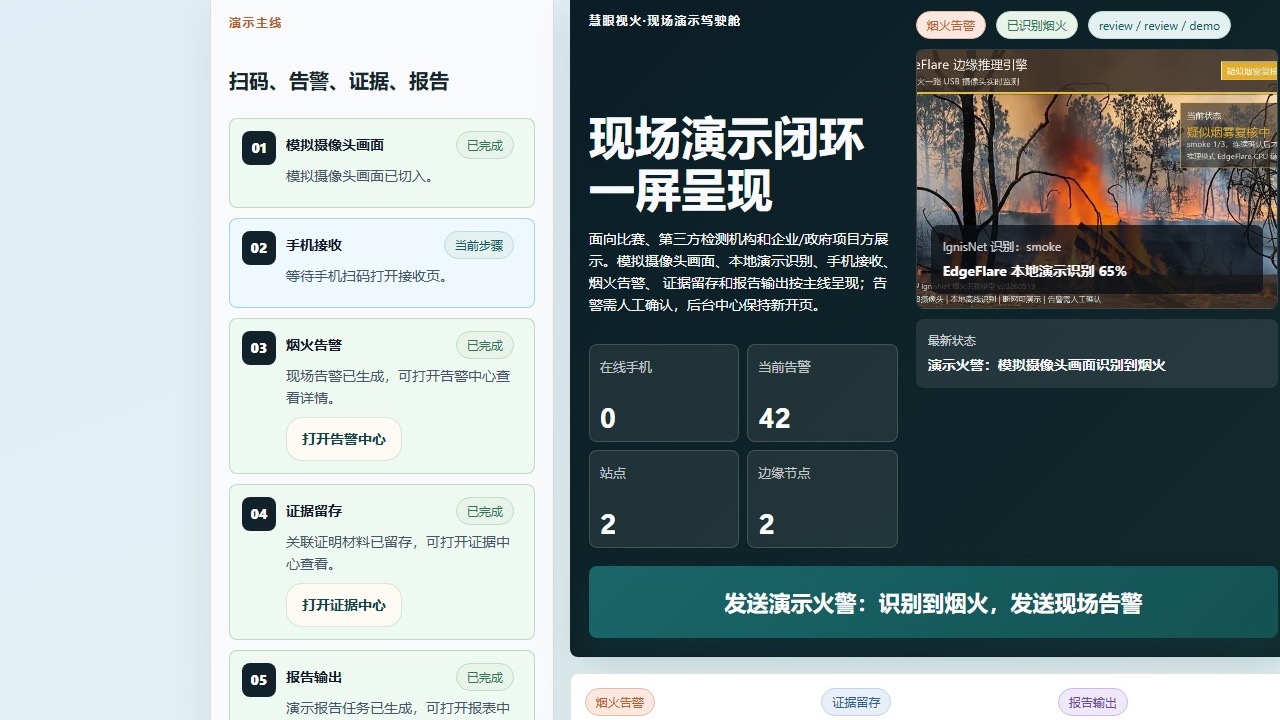
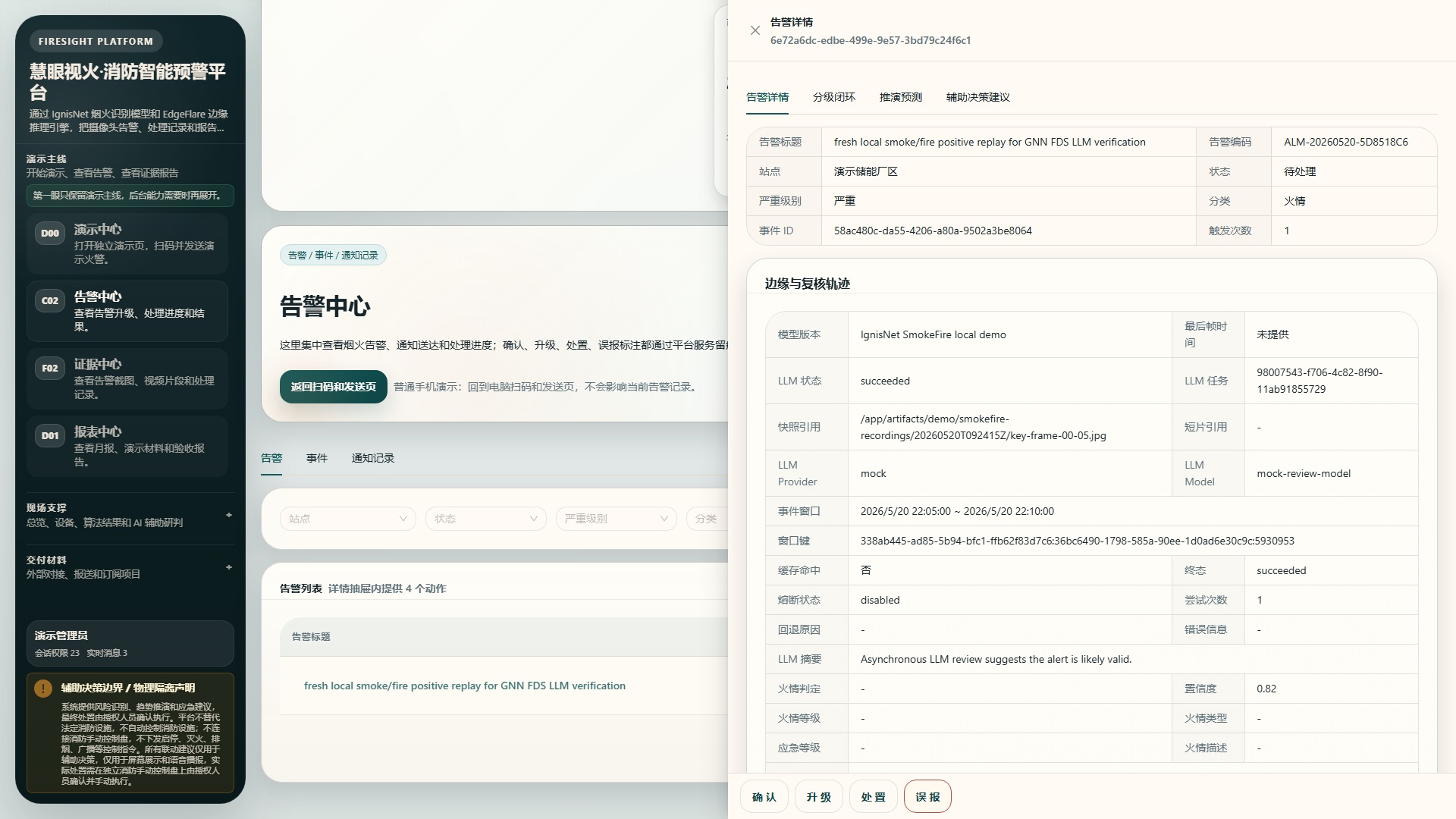
Combines video ingestion, object detection, semantic analysis, and multi-level alerting; metrics are presented with test conditions, while formal site conclusions depend on project records.
Connect existing cameras, streams, or edge nodes with minimal site changes.
Recognize suspected smoke, flame, and critical-zone anomalies with sample-condition notes.
Send risk alerts to the console and duty channel instead of stopping at detection.
Record confirmation, escalation, response, false-alarm labels, and notifications for review.
Archive screenshots, clips, handling records, and reports for demos, pilots, and acceptance preparation.
The site uses real product screenshots and clearly separates decision support, response records, and delivery material boundaries.
Show risk state, camera context, alert status, and demo flow so buyers understand the loop first.
Preserve alert source, severity, notifications, and response actions for duty review.
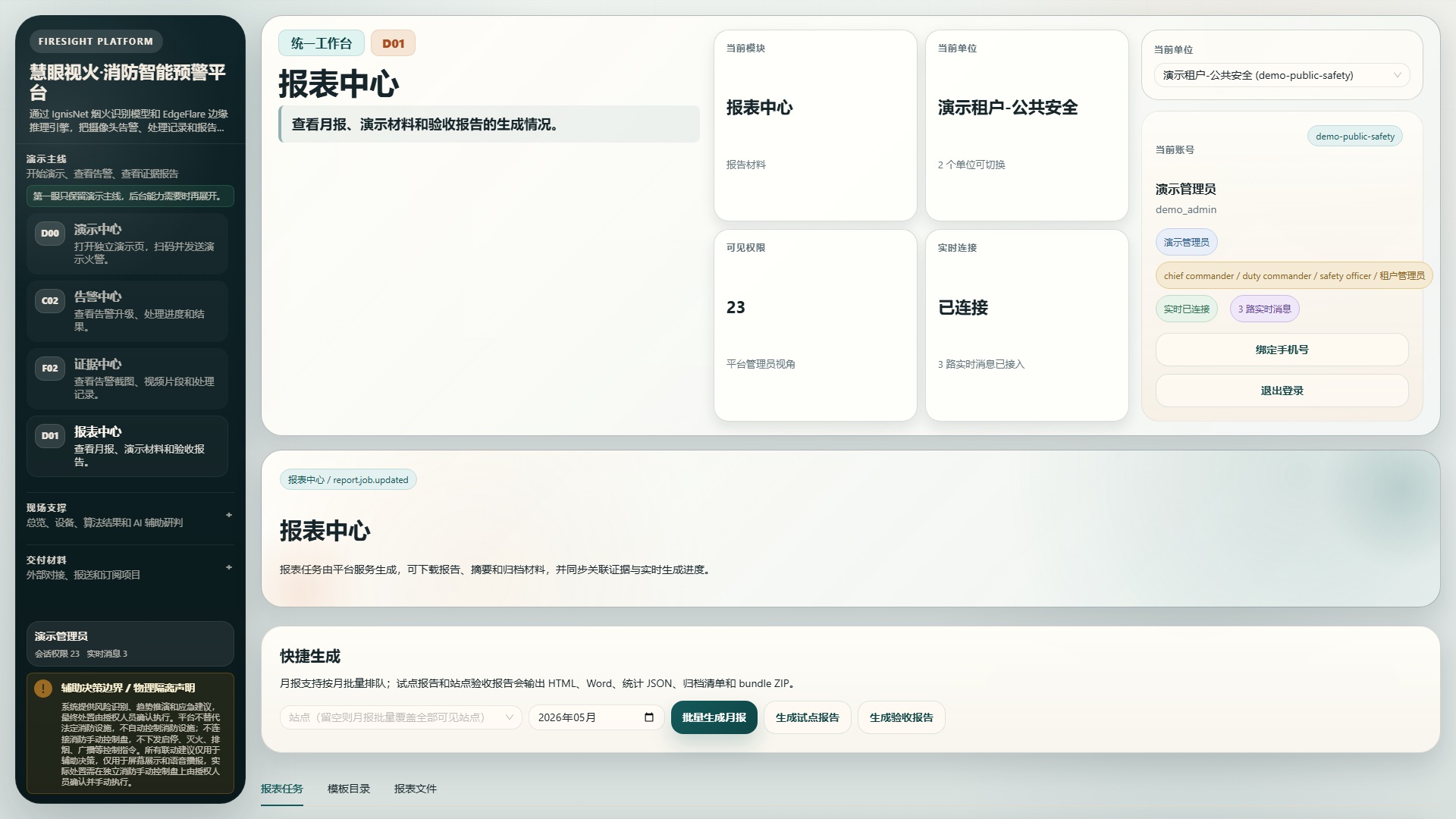
Prepare demo materials, deployment notes, pilot records, and review reports for pilot delivery.
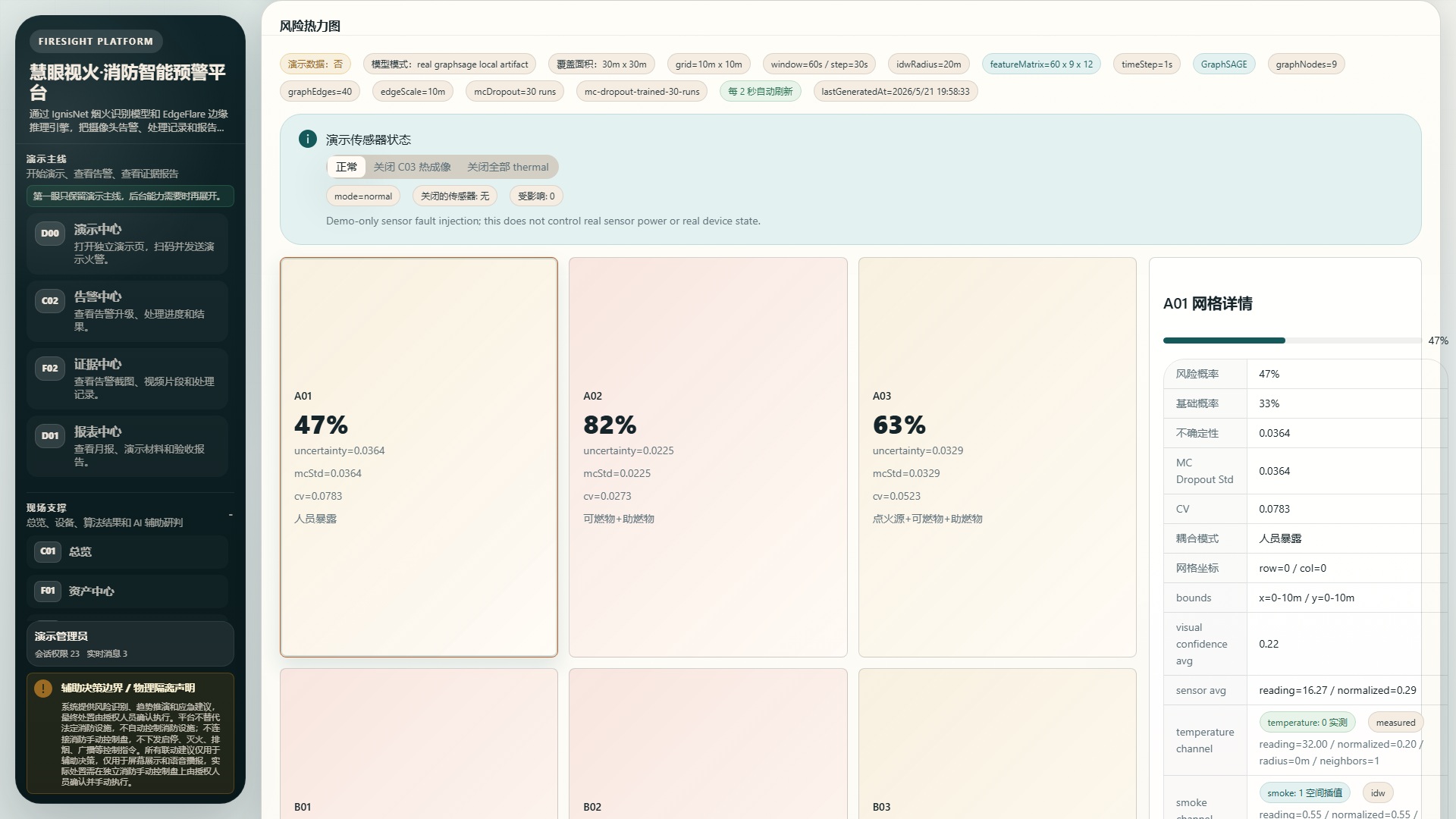
Collect risk heatmaps, model outputs, and supporting notes for people to review, not to replace human response.
Start from three easy-to-understand scenarios, then refine with real samples and site false-positive sources.
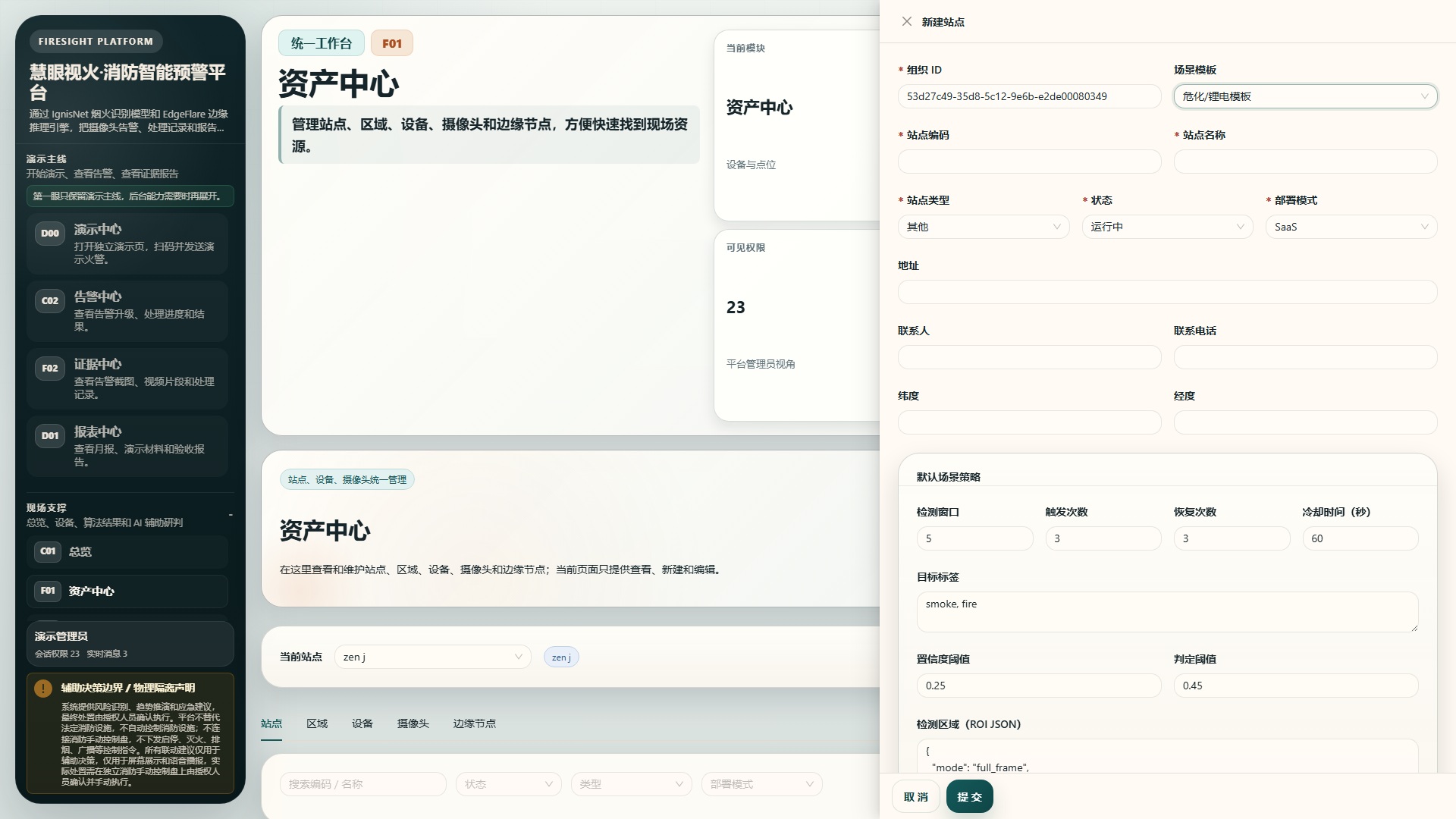
Specialized negative-sample training addresses steam, welding glare, and complex heat sources to reduce false alarms in high-risk plants.
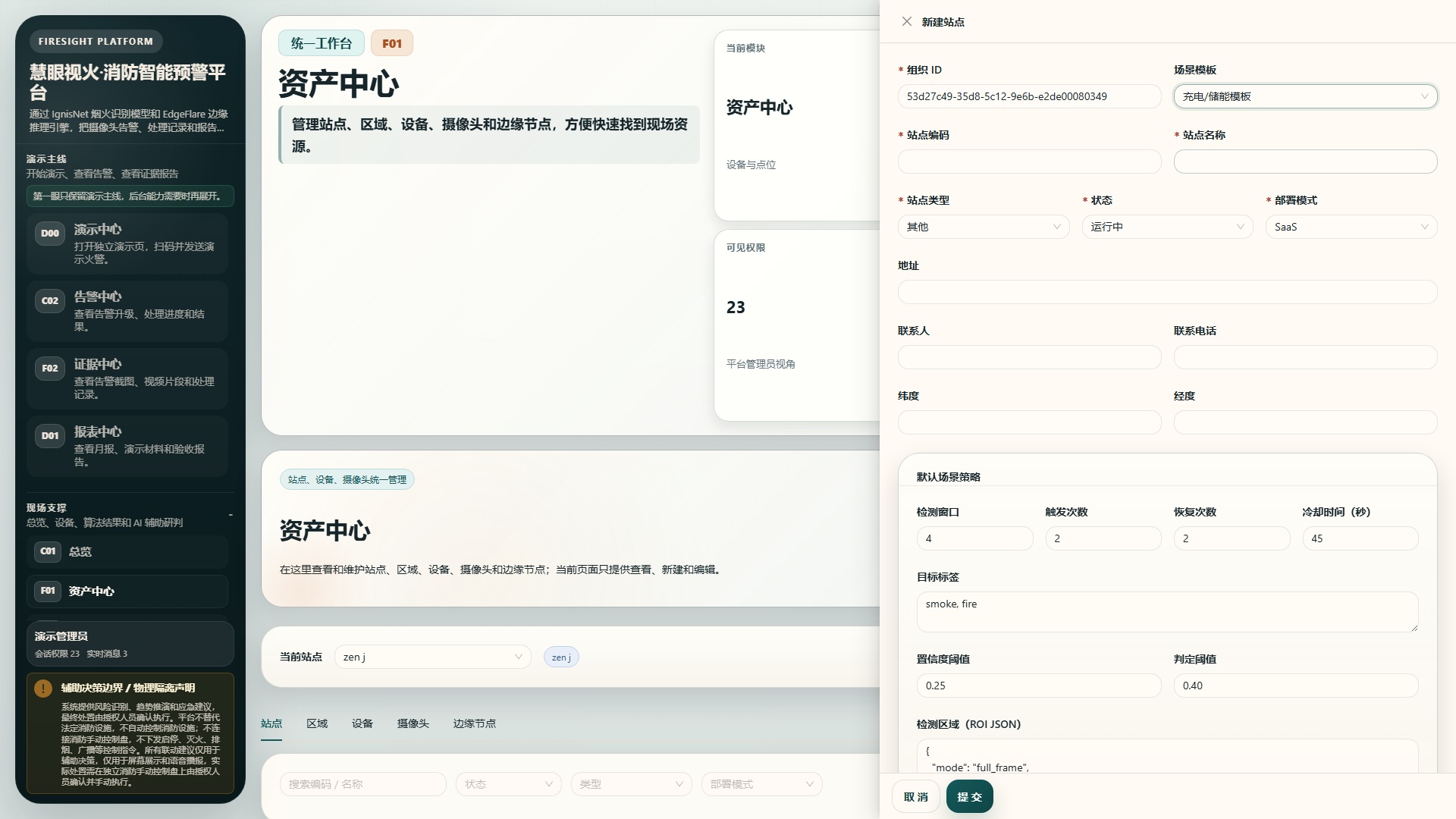
Focuses on early thermal runaway warnings and headlight suppression for more reliable station-level monitoring.
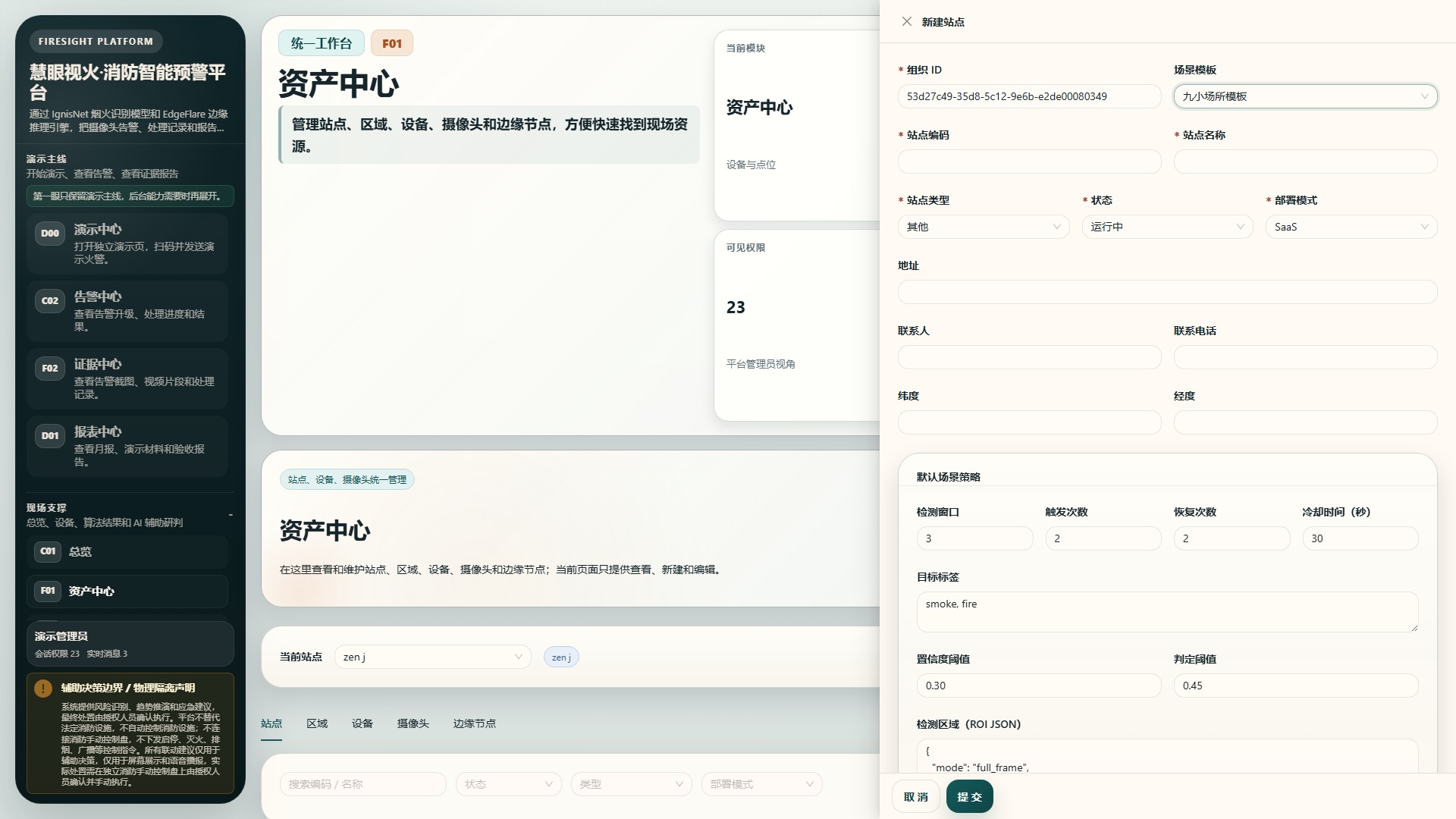
For workshops, timber sites, and small shops where budgets are tight but risk remains real, with an emphasis on affordable deployment.
Show sample conditions, site review, and human confirmation together so demo or training records do not become formal acceptance claims.
| Metric | Value | Condition | Why it matters |
|---|---|---|---|
| False positives under complex light | Joint optimization with negative samples and semantic reasoning | Validated against steam, welding glare, and vehicle headlights | Better suited for continuous production environments. |
| Update capability | Quarterly model iteration | Based on field feedback and new samples | Prevents the system from stagnating after go-live. |
| Deployment fit | Private, edge, or API deployment | Select based on IT and security requirements | Works across enterprises, parks, and public-sector platforms. |
The site explains deployment direction and delivery preparation without presenting local demos or screenshots as production facts.
Used for solution walkthroughs, feature review, and internal validation, not as a production claim.
Used for site or pre-release validation; conclusions must come from project records.
Can connect to field devices, edge nodes, and customer networks based on security requirements.
This boundary is visible in the body copy so customers do not mistake AI alerts for automated fire-control actions.
The system is for risk recognition, alerting, evidence retention, and response support.
It does not connect to manual fire-control panels or automatically issue extinguishing, smoke exhaust, or broadcast commands.
Formal site acceptance, third-party acceptance, and standards certification depend on project records and acceptance materials.